There is a point when the reason to care about food changes. You may still want to feel good in your clothes. You may still care about strength, confidence, or a number on the scale. But after 40, the bigger question is often quieter: what kind of energy, freedom, and health do I want to carry into the next twenty years?
This is not about being scared of aging. It is about noticing that everyday choices begin to have a longer echo. The meals you repeat, the sleep you protect, the movement you keep doing, and the checkups you do not put off can all support the version of you who wants to travel, play with children or grandchildren, work with focus, and feel at home in your own body.
Your body is not “breaking down.” The job is changing.
Getting older does not automatically mean poor health, and 40 is not a biological cliff. But many risk factors that matter for long-term health become easier to see in midlife. Blood pressure, blood lipids, blood glucose, body composition, sleep, stress, and activity levels can shift gradually. Family history and life circumstances matter too.
The important word is gradually. Cardiovascular disease does not usually arrive because of one meal. Changes in the arteries can develop over years, influenced by many factors including blood pressure, cholesterol levels, diabetes, smoking, activity, genetics, and diet. That is exactly why small, repeatable habits are worth more than a dramatic two-week reset.
Four reasons everyday food deserves more attention now
Energy has to last longer
Less sleep, more responsibilities, and less margin for recovery can make erratic meals feel different than they did at 25. A more steady meal pattern can make the day feel more manageable.
Muscle and strength become assets
Adults naturally tend to lose muscle mass with age. Regular movement, especially strength work, and enough nourishing food support function and independence over time.
Risk can be quiet for years
High blood pressure and unfavorable cholesterol or blood-glucose levels often do not announce themselves. That makes routine screening and everyday patterns more useful than waiting to “feel unhealthy.”
Your habits compound
A restaurant meal is not the issue. The weekly pattern is. Choosing a few lower-sodium, less sugary, or less processed defaults can add up without making life smaller.
The point is not to fear fat, salt, or your birthday
Wellness culture can make midlife sound like a countdown. It is not. Food is not a moral test, and there is no evidence-based reason to pursue “clean eating” perfection. Your body benefits from an overall pattern that includes vegetables and fruit, whole grains, beans, nuts, fish or other proteins you enjoy, and foods that bring pleasure and connection.
What becomes worth noticing is the concentration of certain things in your normal routine: a lot of added sugar from drinks and packaged snacks; sodium that hides in restaurant meals, soups, sauces, and deli foods; rich extras that show up together every day; or a long stretch with little movement and little sleep. These are signals, not accusations.
Use your checkup as information, not a report card
The most useful numbers after 40 are not all on a food label. They are the numbers you review with a clinician: blood pressure, cholesterol and triglycerides, blood glucose when appropriate, weight trends, and any personal or family history that changes your risk. Ask what matters for you and what a realistic next step would be.
That is especially important if you have high blood pressure, diabetes or prediabetes, kidney disease, heart disease, take medications, or have a strong family history. An app can help you notice patterns; it cannot diagnose a condition or replace individualized medical guidance.
What a grown-up food goal can look like
Not “never eat dessert.” Not “be perfect at every restaurant.” Try something closer to this:
I want more meals that leave me energized rather than wiped out.
I want a few easy breakfasts and lunches that do not rely on added sugar or convenience foods every day.
I want to know when sodium, saturated fat, or another number is becoming a pattern — before it becomes something I ignore.
I want food to support my life, not become another source of stress.
Those goals are not flashy. They are also the kind that can survive a busy week, a vacation, a birthday dinner, and the rest of real life.
A gentler way to start this week
Pick one meal you eat often and get curious about it. Is the sodium mostly in the sauce? Is the afternoon slump connected to a sweet drink and a light lunch? Could you add a vegetable, a piece of fruit, or a more filling protein without changing the entire meal? One honest observation is enough to begin.
For a practical starting point, read our guide to hidden sodium after 40, then use the four nutrition numbers beyond calories to see the bigger picture. You do not need more willpower. You need a clearer view of the patterns you already have.
BUILT FOR THE LONG VIEW
Make everyday food decisions easier to understand.
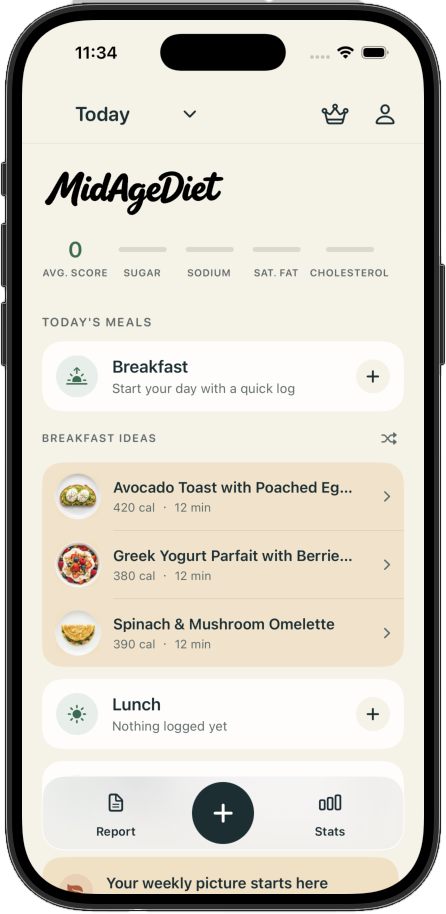
MidAgeDiet is being built for people who want a calmer, more useful picture of what their meals add up to.
- Log meals by photo or simple text
- Track added sugar, sodium, saturated fat, and cholesterol
- Spot patterns over days and weeks
- Get practical meal ideas when you need them