
You cook a reasonable dinner. You do not add much salt at the table. Yet a day can still end with more sodium than you expected. That is because sodium is usually not hiding in one dramatic choice; it is spread across the convenient things that make a normal day work: toast, a sandwich, prepared soup, a sauce, a snack, takeout.
That is worth paying attention to, especially as the years add up — but it is not a reason to turn eating into a test you can fail. The useful question is simpler: where is the sodium doing the most work in my usual week? Find one or two answers, and you have something you can actually change.
The problem is often “a little of everything”
Salt added while cooking is visible, so it gets the blame. Packaged and restaurant foods are usually where the bigger surprises live. A bottled dressing, deli sandwich, frozen entrée, instant noodle packet, or restaurant sauce can contribute a large amount before you ever reach for the shaker.
This is why an otherwise nutritious meal can still be sodium-heavy. Beans, vegetables, fish, and whole grains are excellent building blocks; their canned, cured, pre-seasoned, or sauce-covered versions can be very different products. The goal is not to label foods “good” or “bad.” It is to see the tradeoff clearly enough to choose on purpose.
Use the label as a comparison tool, not a scorecard
On a U.S. Nutrition Facts label, 5% Daily Value or less is considered low sodium and 20% Daily Value or more is considered high. You do not need to calculate every milligram. When choosing between two familiar products, compare the sodium line using the same serving size.
Start with the serving size. If you normally eat two servings, double the number before deciding.
Compare like with like. Two soups, two breads, two sauces — not a soup against a snack.
Look for your easy swap. “No salt added,” “low sodium,” or a plain version is often enough.
One useful habit: check the label on the item you buy every week, not a food you would never buy. A lower-sodium broth, jarred sauce, turkey slice, or canned bean can reduce your weekly total without changing the meal you look forward to.
Three changes that still let dinner feel like dinner
1. Make the sauce the adjustable part
Sauce is often the fastest place to reduce sodium without rebuilding the whole meal. Ask for it on the side, use half the packet, or stretch it with lemon, vinegar, garlic, chili, ginger, herbs, or a little unsalted yogurt. Taste first. Often the full amount is more than the dish needs.
2. Rinse what comes from a can
If canned beans or vegetables are part of your routine, draining and rinsing them is a small extra step. It is not magic, but it is practical. Then add flavor back with olive oil, citrus, pepper, cumin, paprika, herbs, or a splash of vinegar rather than automatically adding more salt.
3. Balance the next meal — do not “make up for” the last one
A salty restaurant meal is not a ruined day. The calmer move is to make the next meal simpler: fruit and plain yogurt for breakfast, eggs and vegetables for lunch, or a home-cooked dinner built around fresh ingredients. That is more sustainable than skipping meals or trying to eat perfectly tomorrow.
A five-minute reset for your next grocery trip
Pick only one category from this list and compare it before it goes in your cart:
- bread or tortillas
- breakfast cereal or a savory breakfast item
- deli meat, cheese, or a sandwich filling
- canned beans, soup, broth, or pasta sauce
- a frozen meal, snack, or favorite condiment
If a similar option has meaningfully less sodium and you would still enjoy it, that is a win. No pantry purge required. Small changes are more likely to become your normal than a dramatic reset on Monday morning.
MAKE THE PATTERN EASIER TO SEE
Know what your everyday meals add up to.
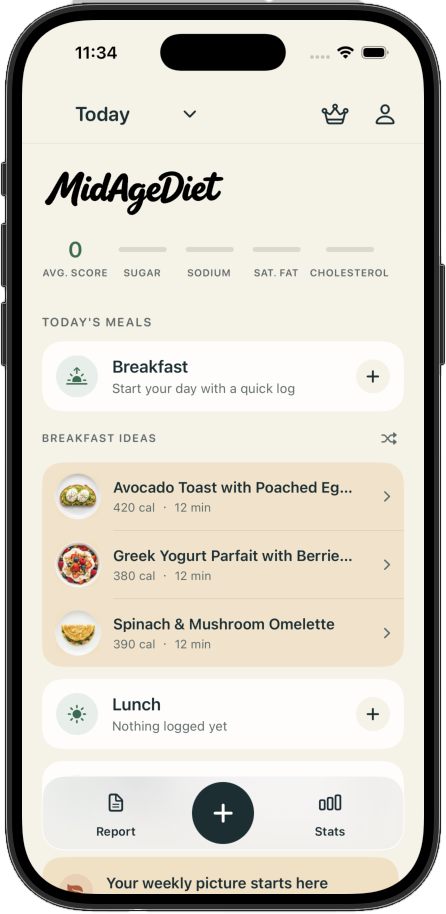
MidAgeDiet is being built for adults who want a clearer food picture without calorie obsession.
- Log meals by photo or simple text
- Track added sugar, sodium, saturated fat, and cholesterol
- Spot patterns over days and weeks
- Get practical meal ideas when you need them