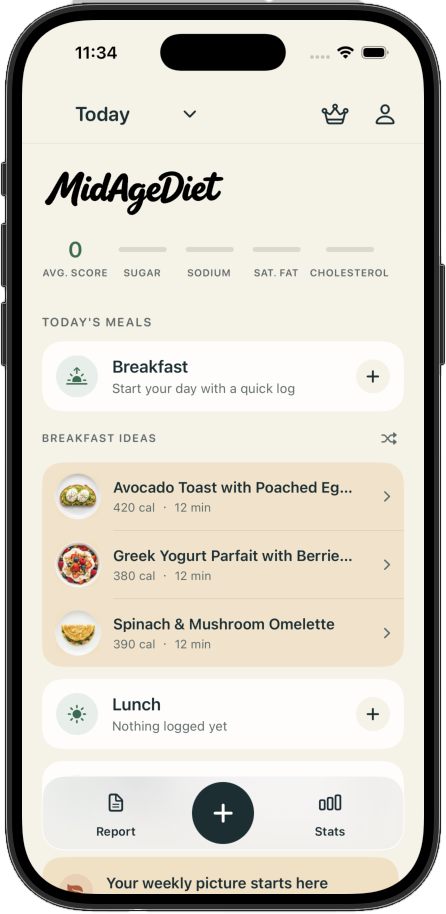

Most nutrition apps start with calories. That is understandable: calories are easy to compare, and they are part of the picture. But they do not tell you whether a meal is built on fresh ingredients, whether its flavor comes mostly from sauce, or which parts of your usual routine may be worth paying attention to over time.
MidAgeDiet keeps an eye on four additional numbers: added sugar, sodium, saturated fat, and cholesterol. Not so that every meal becomes a verdict. Not to make you fear food. They are simply four signals that can make the “I eat pretty well… probably?” feeling more concrete.
Why calories alone can miss the point
Two lunches can have a similar calorie count and leave you with very different information. One may be a grain bowl with vegetables, beans, fish, and a simple dressing. The other may be a large sandwich with deli meat, cheese, a sweet drink, and salty chips. Neither needs to be called “good” or “bad,” but they are not interchangeable if the second pattern happens most days.
Looking beyond calories gives you a more useful question: what could I keep, and what one part could I adjust? Maybe it is the drink, the dressing, the processed protein, or the portion of a rich side. That is a much more livable approach than trying to rebuild your entire diet on Monday.
Added sugar
Useful for noticing sweetness that is added during processing — often in drinks, flavored yogurt, cereal, sauces, and snacks.
Sodium
Often concentrated in packaged foods, restaurant meals, deli items, soups, sauces, and convenience foods.
Saturated fat
A helpful context clue when rich meats, full-fat dairy, butter, coconut products, or fried foods are frequent.
Cholesterol
One more piece of the whole-food picture, especially when a day repeatedly centers on animal-based foods.
1. Added sugar: look for the sweetness you did not choose
Fruit contains naturally occurring sugar. That is not what “added sugars” on the Nutrition Facts label means. Added sugars are put into foods and drinks during processing or preparation. The label separates them out, which makes it easier to notice where they are coming from.
For many people, the biggest win is not giving up dessert. It is finding the invisible everyday sources: a sweetened coffee, a bottle of tea, flavored yogurt, cereal, bottled dressing, or a sauce that turns up at lunch and dinner. Swapping just one recurring item for a less-sweet version can matter more than policing an occasional treat.
2. Sodium: the number that loves convenience
Sodium is a good example of why a whole day matters more than a single food. A bagel at breakfast, turkey sandwich at lunch, soup at dinner, and a few snacks can all seem reasonable on their own. Together, they can stack quickly.
The most practical approach is to compare products you already buy, use sauces as an adjustable element, and keep some easy low-sodium building blocks around. Our guide to sodium after 40 walks through those choices without turning dinner into homework.

3. Saturated fat: notice the repeated “rich extras”
Saturated fat is not a reason to ban cheese, eggs, a steak, or a favorite family meal. It is a useful signal when several rich elements regularly land on the same plate: processed meat, cheese, creamy sauce, butter, and fried sides. The U.S. Dietary Guidelines recommend keeping saturated fat below 10% of daily calories from age 2 onward.
A small adjustment can preserve what you enjoy: choose one rich element rather than three, use a vinaigrette instead of a creamy dressing sometimes, or pair a higher-saturated-fat meal with vegetables and a simpler next meal. The aim is variety, not deprivation.
4. Cholesterol: context beats a single number
Dietary cholesterol does not have a Daily Value on the current U.S. Nutrition Facts label. That is one reason it is best treated as context, rather than a score to chase. The Dietary Guidelines recommend eating as little dietary cholesterol as possible while consuming an overall healthy eating pattern.
In practical terms, look at the whole plate and the repeated pattern. If most of your protein comes from processed meat, fatty cuts, or full-fat dairy, adding more beans, fish, nuts, poultry, and plant-forward meals creates variety without requiring a dramatic rulebook.
Try this: a 60-second meal check
When you log a meal or look at a menu, you do not need to evaluate all four numbers every time. Pick the question that fits the meal:
Sweet drink or snack? Is added sugar doing more work here than I realized?
Restaurant, soup, sauce, or packaged food? Is sodium likely the number worth noticing?
Rich, cheesy, creamy, fried, or meat-heavy? Could I keep the part I love and lighten one other part?
Nothing looks extreme? Great. Enjoy it and move on.
This is the point of tracking: not to be more vigilant all day, but to make one clearer decision when it is useful — and then get on with your life.
A CALMER FOOD PICTURE
See what your ordinary meals add up to.
MidAgeDiet is being built to make these four signals easier to notice — without turning food into a spreadsheet.
- Log meals by photo or simple text
- Track added sugar, sodium, saturated fat, and cholesterol
- Spot patterns over days and weeks
- Get practical meal ideas when you need them