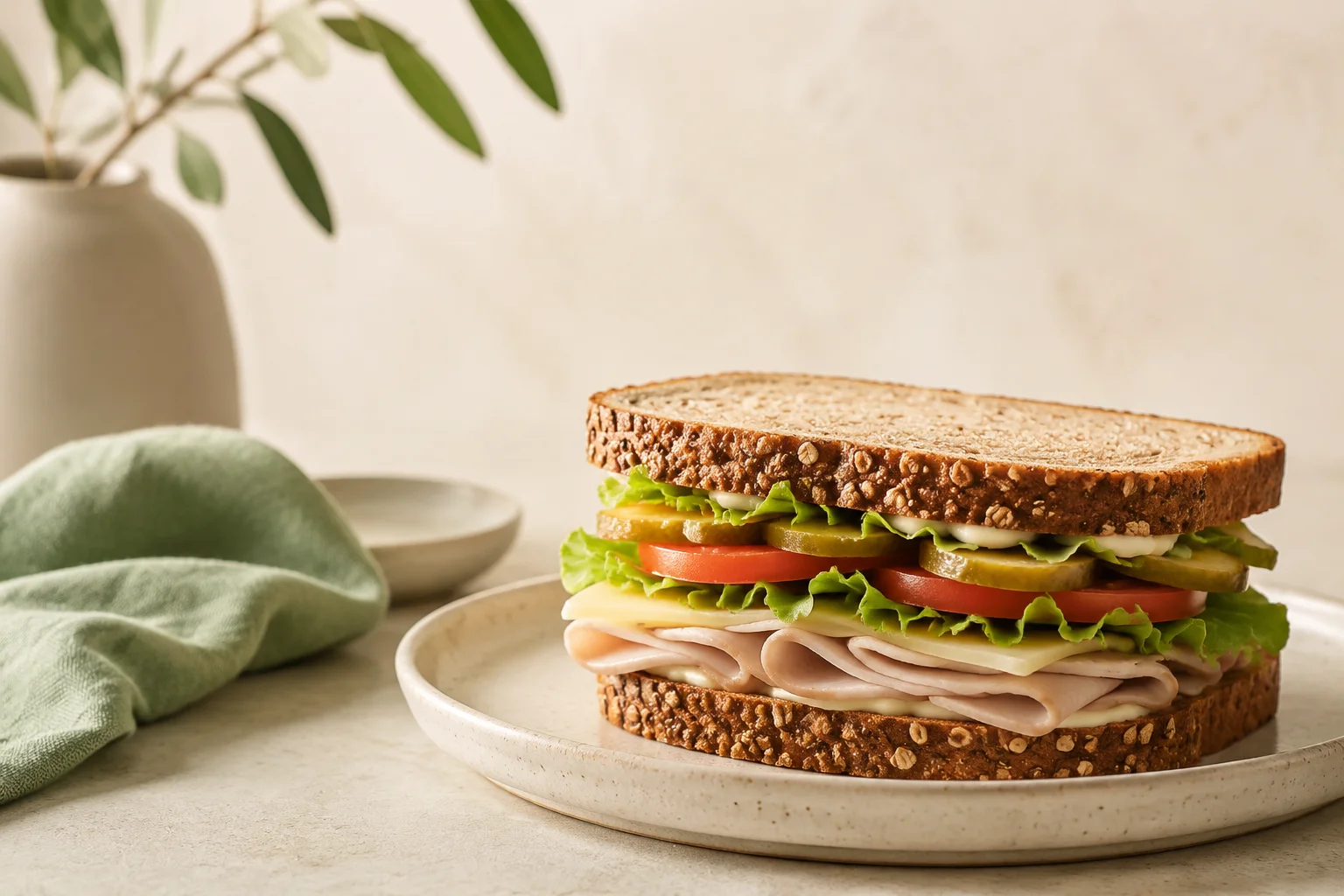
A turkey sandwich has a healthy reputation for good reason: it is familiar, portable, filling, and often feels like a lighter choice than fast food. But “lighter” and “lower sodium” are not the same thing. A sandwich can collect sodium in several ordinary layers before you notice it.
This is not a warning to stop eating sandwiches. Sodium is an essential nutrient, and one lunch does not define your health. The useful question is whether this is a meal you repeat several days a week — and, if it is, whether one layer could do a little less of the work.
Start with the meat — but do not stop there
Deli turkey is convenient because it is seasoned and ready to eat. That is also why sodium can vary dramatically by brand and serving size. “Oven roasted,” “natural,” or “lean” can describe useful things, but they do not tell you the sodium number. Compare two packages using the amount you would actually put in a sandwich.
If turkey is your favorite, keep it. A lower-sodium option, a slightly smaller portion, or rotating in leftover roast chicken, egg, beans, or tuna can change the routine without turning lunch into a project.
Bread is quiet because it does not taste salty
Bread rarely tastes like the problem. But it appears often, and sandwich bread, rolls, wraps, and bagels can contribute more than people expect. The practical move is simply to compare the sodium line between brands when you are already buying bread. If you usually eat two slices, compare two-slice portions.
This is not an argument for skipping the bread. It is an argument for remembering it counts as part of the meal, not just the container around the meal.
The flavorful extras are often the easiest lever
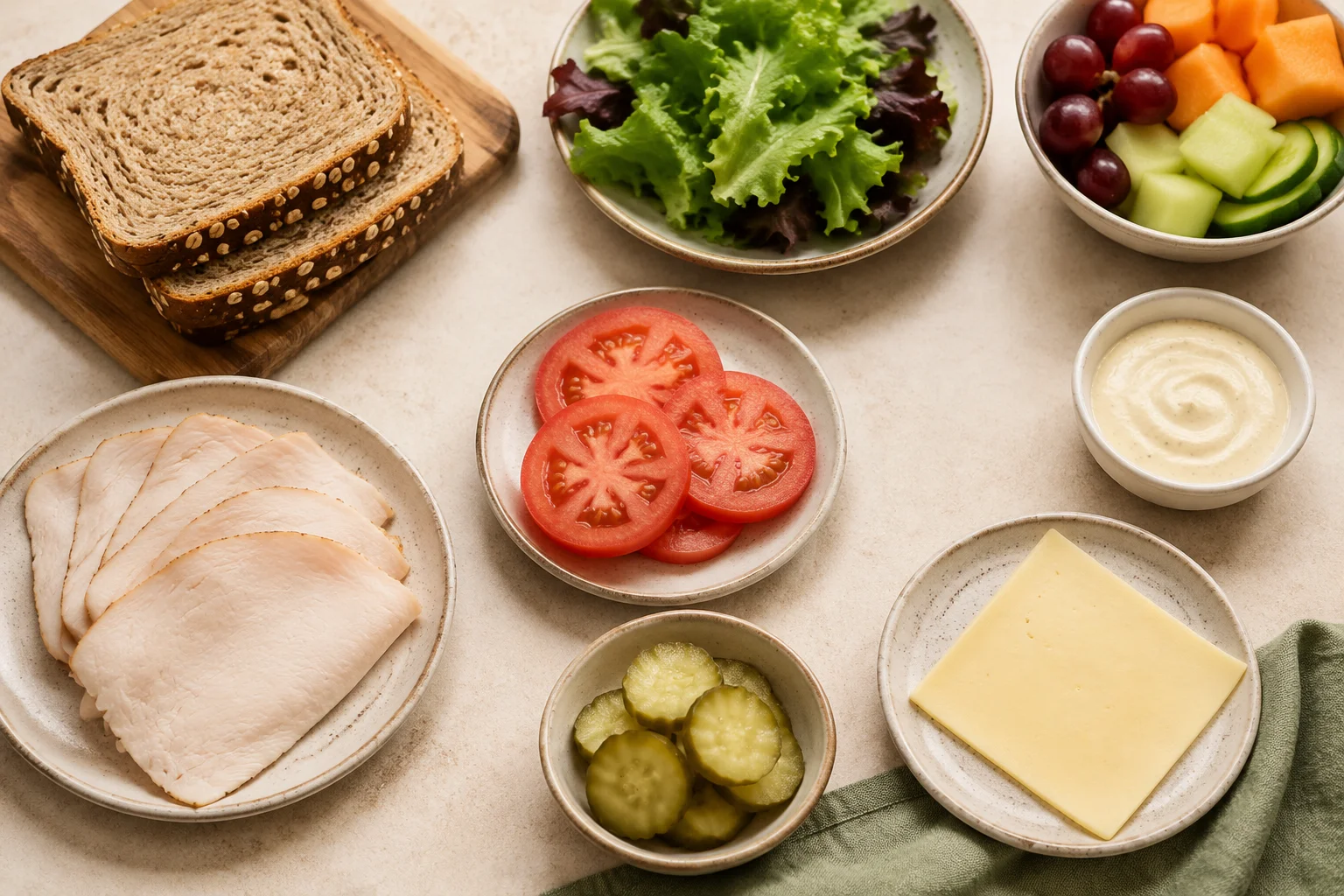
Cheese, pickles, olives, mustard, bottled dressing, and creamy sauce can each be perfectly reasonable on their own. Together, they can make a sandwich much saltier than the turkey alone. Unlike the sandwich itself, these are often adjustable: use one slice of cheese instead of two, choose pickles or cheese rather than both, or get sauce on the side.
That last one is particularly useful. Sauce is where flavor and sodium can be concentrated, but having it on the side lets you use the amount you actually enjoy instead of the amount that arrived in the sandwich.
Try a one-layer sandwich experiment
For one week, do not try to make a perfect sandwich. Keep your normal order or normal grocery list, then choose just one change:
Option 1: choose a lower-sodium deli turkey.
Option 2: make cheese the rich extra and leave out pickles or a salty sauce.
Option 3: ask for sauce on the side and use what tastes good to you.
Option 4: have the sandwich with fruit or vegetables instead of another salty packaged side.
These are not dramatic changes. That is exactly the point. A small adjustment to a lunch you already repeat has more staying power than a total reset that disappears by Thursday.
One sandwich is not the problem. A pattern can be useful information.
A restaurant sandwich once in a while does not need a postmortem. But if deli sandwiches, soups, takeout, and packaged snacks often fill the same week, sodium can add up in ways that are hard to see meal by meal. Use the bigger picture, not guilt, to decide whether one familiar default deserves an update.
For a broader list of surprising sodium sources, see 7 foods that are surprisingly high in sodium. For a calmer way to compare labels, read why sodium gets harder to ignore after 40.
MAKE THE PATTERN EASIER TO SEE
Know what your usual meals add up to.
MidAgeDiet is being built for adults who want a clearer food picture without calorie obsession.
- Log meals by photo or simple text
- Track added sugar, sodium, saturated fat, and cholesterol
- Spot patterns over days and weeks