
Breakfast advice often asks people to become a different person before 8 a.m. Blend something. Meal-prep six jars. Measure everything. For most weekdays, a better breakfast is much less ambitious: it is something you can make or grab reliably, that tastes good, and that does not leave you hunting for a snack an hour later.
There is no single perfect breakfast. But a useful one usually has two jobs: give you something filling and add something fresh or fiber-rich. From there, you can make it sweeter, savory, warm, cold, fast, or slow depending on the morning.
First, stop trying to “win” breakfast
A croissant with coffee on a Saturday is not a failure. Cereal on a busy school morning is not a failure. The useful thing is to have two or three defaults that make ordinary mornings easier. Repetition is a feature here: it reduces decisions, makes shopping simpler, and gives you room to enjoy the meals you actually look forward to later in the day.
If you are changing breakfast, do not change every part at once. Keep the toast, change the spread. Keep the yogurt, choose plain and add fruit. Keep the coffee, reduce the syrup a little. The smallest change that you will repeat beats a perfect plan you abandon next week.
Three breakfast formulas you can repeat
FORMULA 1 · SAVORY
Protein + whole grain + produce
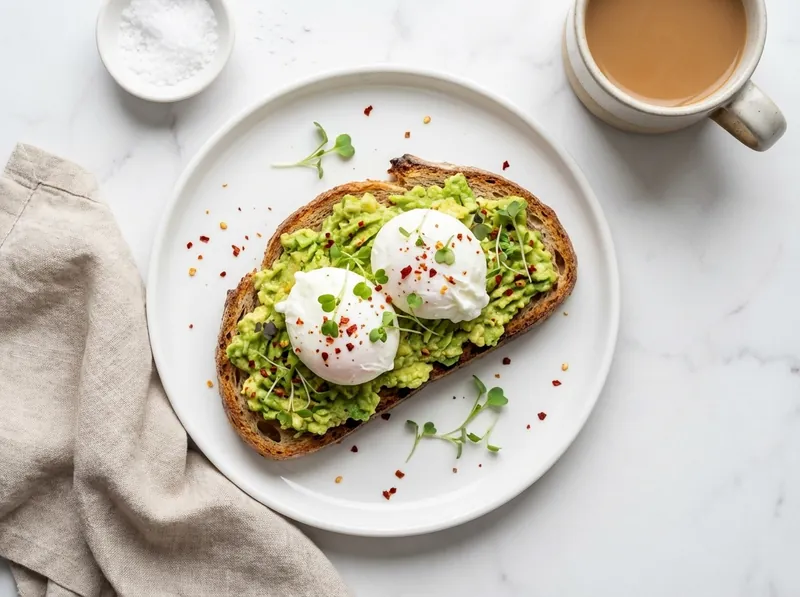
Think eggs, tofu scramble, cottage cheese, or leftover beans with whole-grain toast or a tortilla, plus fruit, tomatoes, greens, or sliced avocado.
Try: scrambled eggs + whole-grain toast + berries.
FORMULA 2 · COLD
Plain yogurt + fruit + crunch
Use plain Greek yogurt or another unsweetened yogurt, then add berries, sliced banana, nuts, seeds, or oats. The fruit brings sweetness; the crunch makes it feel like a meal.
Try: plain yogurt + berries + walnuts + cinnamon.
FORMULA 3 · WARM
Oats + protein + texture
Oats are a flexible base. Add nut butter, nuts, seeds, milk or soy milk, and fruit. If sweet oatmeal is not your thing, make it savory with an egg and vegetables.
Try: oats + peanut butter + apple + cinnamon.
The added-sugar check that does not ruin your morning
You do not need to avoid every sweet breakfast. The useful distinction is between sweetness you add deliberately and sweetness that is already packed into several parts of the meal. A sweetened coffee plus flavored yogurt plus sweet granola can stack before you have eaten anything substantial.
Try choosing one sweet element you really enjoy and letting the rest stay simple. For example: flavored coffee with plain yogurt and fruit, or plain coffee with a favorite granola over unsweetened yogurt. That feels very different from a rule that says “never eat sugar.”
What if you are not hungry in the morning?
You do not have to force a large breakfast because an article says breakfast is important. If you are not hungry, a smaller option can still make the next decision easier: a piece of fruit with nuts, toast with peanut butter, plain yogurt, or an egg with a few crackers. The idea is simply to choose something that works for your appetite and schedule rather than waiting until you are suddenly ravenous.
A five-minute shopping list
Keep one or two choices from each group around. You will have several breakfasts without needing a separate grocery plan.
One more practical tip: if a packaged breakfast is the only thing you will realistically eat, use it. Then add one small companion — fruit, a handful of nuts, or plain yogurt — instead of trying to replace the entire routine overnight.
A CALMER FOOD PICTURE
See what your ordinary meals add up to.
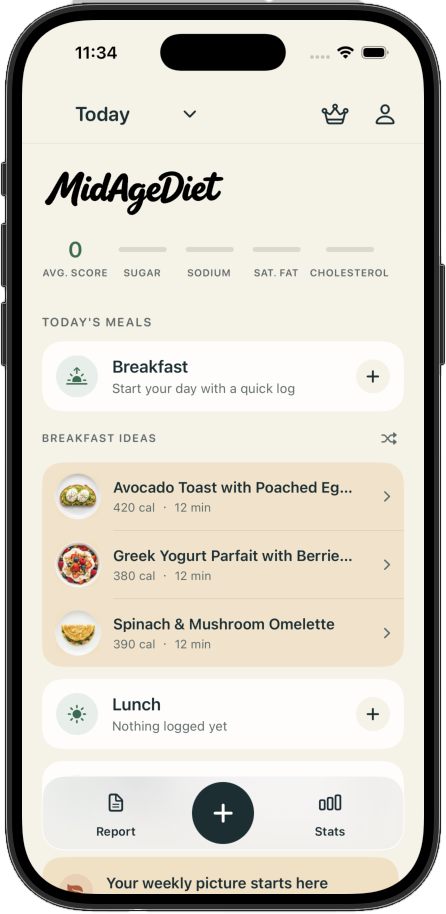
MidAgeDiet is being built to make daily food decisions feel clearer — without turning them into a spreadsheet.
- Log meals by photo or simple text
- Track added sugar, sodium, saturated fat, and cholesterol
- Spot patterns over days and weeks
- Get practical meal ideas when you need them