A big weekend can leave you feeling as if you need to pay something back. Maybe there were restaurant meals, a few drinks, dessert, late nights, travel, or all of it at once. By Monday, it is tempting to skip breakfast, overexercise, promise to eat almost nothing, or begin a strict new rule.
That urge is understandable. But for most people, the more useful reset is not a punishment. It is a return to the ordinary choices that make you feel steady: water, regular meals, some plants and protein, enough sleep, and movement that helps rather than compensates.
Why the compensation cycle makes things harder
Restriction often sounds like control, especially after you have eaten more richly than usual. Yet long gaps without food can make hunger louder, concentration worse, and late-day decisions more difficult. Add poor sleep or dehydration, and the plan to be “good” can quickly become another episode of eating past comfort.
This is not about a lack of discipline. It is about the body responding to a pattern of deprivation and stress. The goal after a bigger weekend is to make the next day easier, not to turn it into a test.
A calmer Monday reset
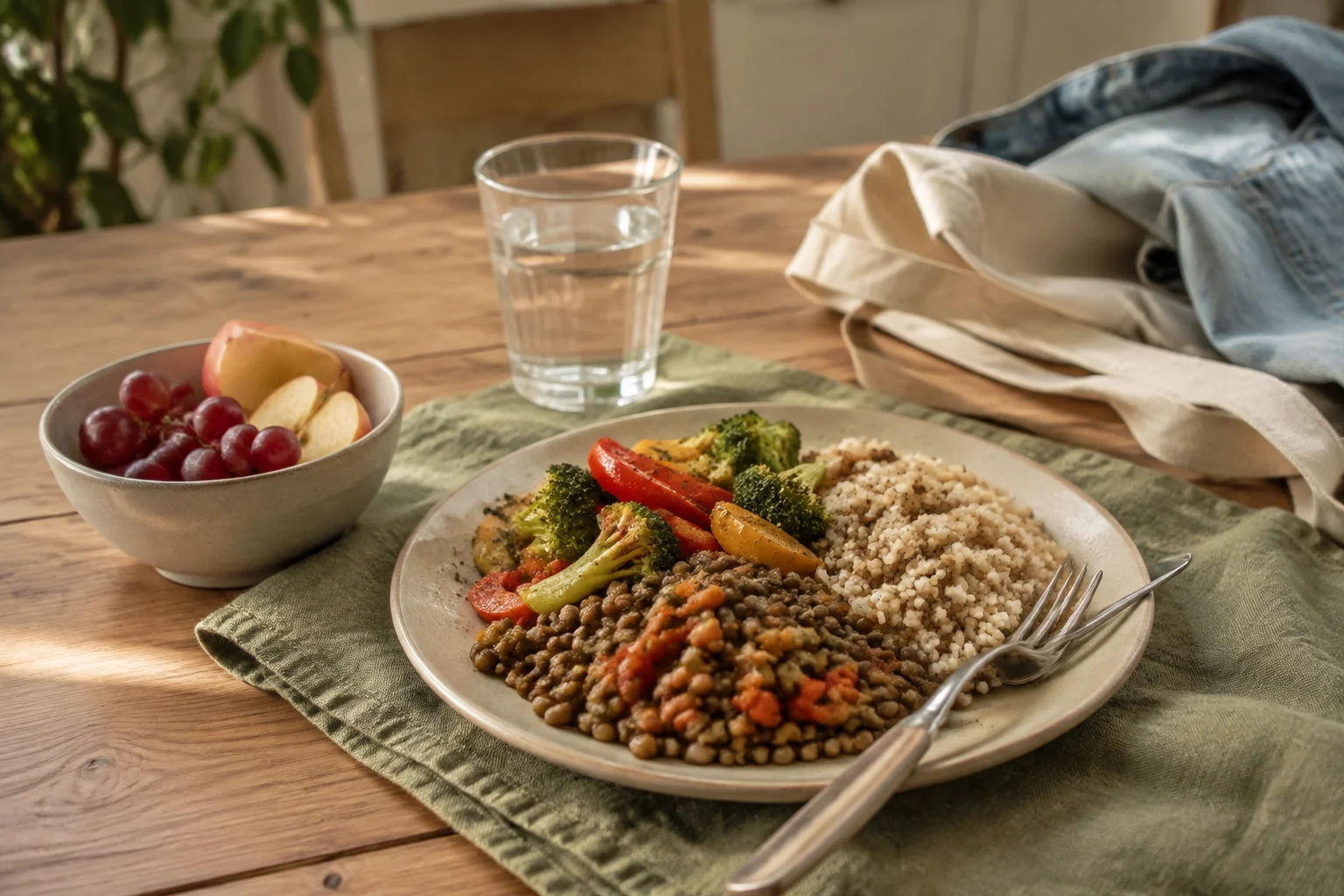
Start with breakfast or lunch as you normally would. Choose something familiar that includes a protein source and a fiber-rich food: yogurt and fruit with oats, eggs and whole-grain toast with vegetables, or beans and leftovers in a simple bowl. If you are not especially hungry, a smaller ordinary meal is fine. You do not need to manufacture hunger, but you also do not need to prove anything by going without food.
Drink water throughout the day, particularly if your weekend included alcohol, restaurant meals, travel, or very salty food. Temporary shifts in scale weight or puffiness can reflect fluid, digestion, and routine changes; they are not a reason to panic or make a medical judgment about yourself.
Four things that help more than “making up for it”
Return to regular meals
Let the next meal be balanced and satisfying. It does not need to be tiny, perfect, or corrective.
Choose gentle movement
A walk, an easy workout, or normal daily activity can help you reconnect with your routine. Exercise does not need to be a consequence for eating.
Make one useful swap
If the weekend was rich or salty, choose a simpler home meal, add fruit or vegetables, or skip the automatic drink. One layer is enough.
Protect the next night of sleep
Sleep makes hunger, energy, and choices easier to manage. A quiet evening may be more helpful than another food rule.
Keep celebration in the picture
Food is part of birthdays, visits, trips, holidays, and a good meal with people you enjoy. Treating those moments as dietary failures makes ordinary pleasure unnecessarily expensive. It also misses the bigger picture: health is built from patterns that have room for real life.
You can notice what made the weekend feel different without turning that observation into shame. Perhaps it was more alcohol than you wanted, less fiber than usual, restaurant portions, or simply several days off schedule. That information can help you make a practical adjustment next time — a glass of water between drinks, one plant-forward meal during travel, or a plan for breakfast when you get home.
A one-day reset that stays humane
Morning: drink water and eat your usual breakfast or a simple alternative when hungry.
Midday: build one satisfying meal around protein, a plant food, and a carbohydrate you enjoy.
Afternoon: take a short walk or move in a way that feels restorative, not punitive.
Evening: choose a normal dinner, lower the pressure, and aim for sleep.
By Tuesday, there is usually no need to keep talking about the weekend. You are already back in the pattern. That is the part worth practicing: not perfect weekends, but a dependable way to return.
For another way to make routine feel easier, read why the healthiest meal may be the one you can repeat. If you want a longer view of the same idea, see why body-friendly habits matter more than body goals.
THE LONGER VIEW
See the pattern without turning it into a verdict.
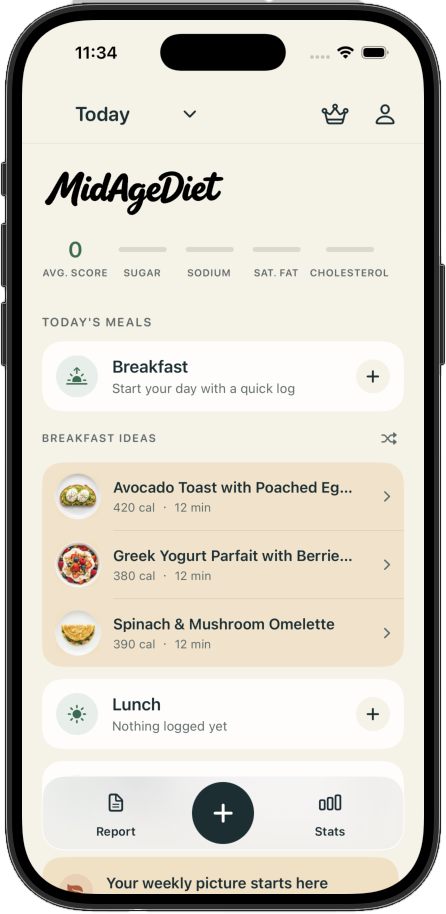
MidAgeDiet is being built to help you understand your ordinary food habits over time — including the weekends — with more clarity and less judgment.
- Log meals by photo or simple text
- Track four food signals beyond calories
- Spot patterns over days and weeks